Intravenous (IV) access is one of the most commonly performed clinical procedures in hospitals, diagnostic laboratories, emergency departments, and outpatient clinics. Choosing the right vascular access device plays a vital role in ensuring patient comfort, procedural success, and healthcare worker safety.
Among the various vascular access devices available today, Butterfly Needles, also known as Scalp Vein Sets or Winged Infusion Sets, remain one of the preferred choices for short-term venous access and blood collection. Their ergonomic winged design, flexible tubing, and precise control make them especially useful in patients with small, fragile, or difficult-to-access veins.
However, like every medical device, butterfly needles offer several advantages while also having limitations that healthcare professionals should understand before selecting them for clinical use.
This guide explores everything you need to know about butterfly needles, including their benefits, drawbacks, clinical applications, and best practices.
What is a Butterfly Needle?
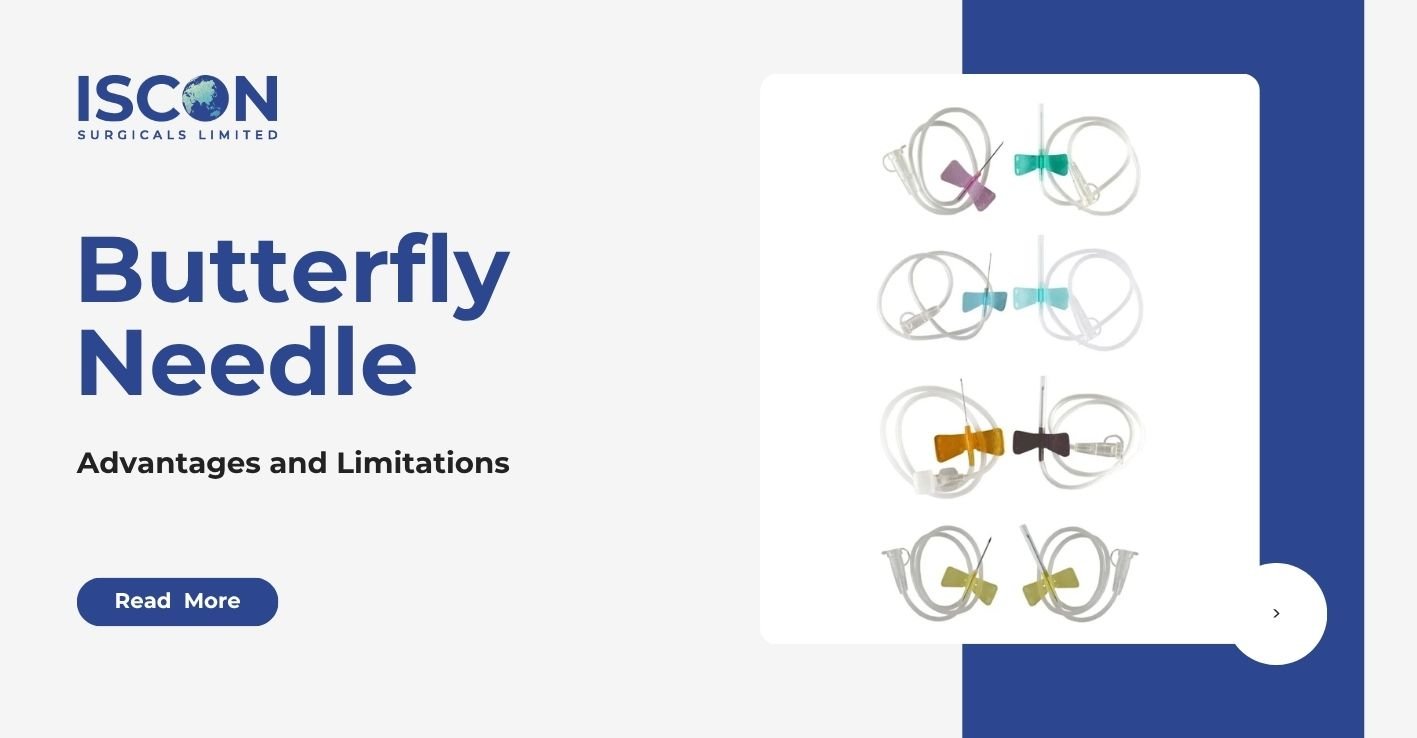
A butterfly needle is a sterile, single-use winged infusion device designed for venipuncture. It consists of:
- Stainless steel needle
- Flexible plastic wings
- Transparent tubing
- Luer connector
The flexible wings allow clinicians to hold the needle securely during insertion, providing better precision and minimizing patient discomfort.
Butterfly needles are generally available in gauges ranging from 18G to 27G, with 21G, 22G, 23G, and 25G being the most commonly used in clinical practice.
Common Clinical Applications
Butterfly needles are widely used for:
- Blood sample collection
- Short-term IV medication administration
- IV fluid therapy
- Pediatric venipuncture
- Geriatric patient care
- Oncology treatments
- Difficult venous access
- Outpatient diagnostic procedures
Advantages of Butterfly Needles
1. Better Patient Comfort
One of the biggest reasons healthcare professionals choose butterfly needles is improved patient comfort.
The smaller needle size and shallow insertion angle help reduce pain, making the procedure less intimidating.
This is particularly beneficial for:
- Children
- Elderly patients
- Patients with needle anxiety
- Patients requiring frequent blood draws
2. Improved Control During Venipuncture
The wing-shaped grips provide superior stability while inserting the needle.
This enables clinicians to:
- Maintain precise needle positioning
- Reduce accidental movement
- Improve first-stick success rates
- Perform smoother venipuncture
3. Ideal for Small and Fragile Veins
Butterfly needles perform exceptionally well in patients with:
- Small veins
- Fragile veins
- Superficial veins
- Rolling veins
- Examples include:
- Neonates
- Pediatric patients
- Elderly individuals
- Oncology patients
- Chronically ill patients
4. Reduced Risk of Multiple Needle Sticks
Improved precision means:
- Higher first-attempt success
- Less patient trauma
- Lower anxiety
- Better patient satisfaction
5. Versatility
Butterfly needles can be used for:
- Blood collection
- Diagnostic testing
- Short IV infusions
- Medication administration
- Contrast media administration (when appropriate)
6. Better Visibility
Most butterfly sets feature transparent tubing, allowing clinicians to observe blood flashback quickly and confirm successful vein entry.
7. Improved Healthcare Worker Safety
Modern butterfly needle systems may incorporate safety-engineered features that help reduce accidental needlestick injuries and exposure to bloodborne pathogens.
Limitations of Butterfly Needles
1. Not Suitable for Long-Term IV Therapy
Butterfly needles are designed for short-duration use. Because the metal needle remains inside the vein, prolonged use can increase the risk of vein irritation, infiltration, or injury. For longer therapies, IV cannulas are generally preferred.
2. Slower Flow Rate
Due to their smaller gauge, butterfly needles provide slower blood and fluid flow compared to larger-bore needles. They are therefore not ideal for rapid fluid resuscitation or high-volume transfusions.
3. Risk of Hemolysis
Very small gauge butterfly needles may increase the risk of hemolysis during blood collection if improper technique is used, potentially affecting laboratory results.
4. Higher Cost
Butterfly needles generally cost more than standard straight needles because of their integrated tubing and winged design.
5. Limited Blood Collection Speed
For large-volume blood collection, straight needles or larger-gauge systems may be more efficient.
Why Choose ISCON Surgicals Butterfly Needles?
ISCON Surgicals manufactures high-quality medical devices designed to support safe and efficient clinical practice.
Key features include:
- Sterile, single-use design
- Precision-engineered stainless steel needle
- Flexible wings for enhanced control
- Kink-resistant tubing
- Secure Luer connection
- Multiple gauge options
- Reliable quality for hospitals, laboratories, and healthcare facilities
Conclusion
Butterfly needles remain an essential tool for modern venipuncture and short-term intravenous access. Their precision, patient comfort, and suitability for difficult veins make them indispensable in hospitals, pathology laboratories, blood collection centers, and outpatient clinics. While they are not suitable for every clinical scenario—particularly where rapid fluid administration or long-term vascular access is required—selecting the right device based on patient needs and clinical objectives helps ensure safe and effective care.