One of the most trusted techniques is Combined Spinal Epidural (CSE) anesthesia, which offers the best of both worlds—fast-acting spinal anesthesia for immediate pain relief and an epidural catheter for continuous pain management during and after surgery.
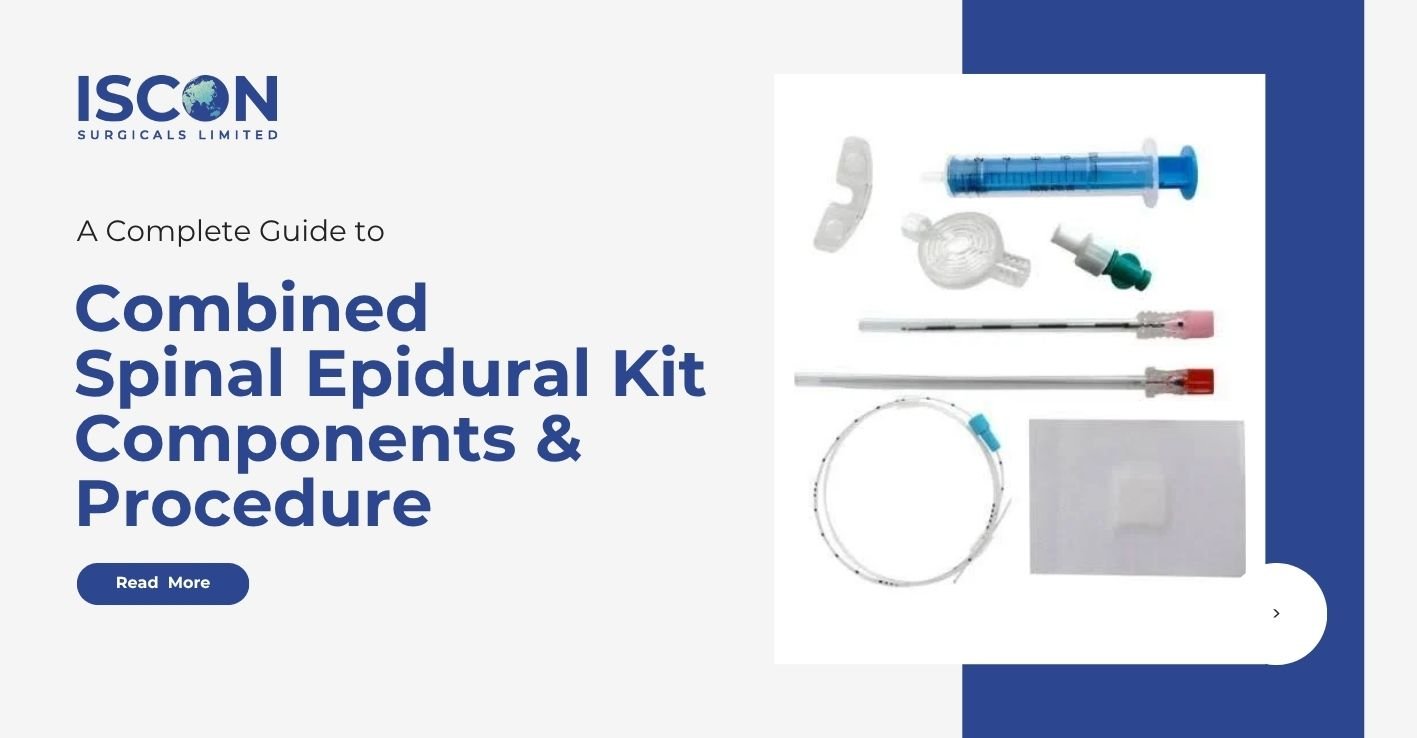
A Combined Spinal Epidural (CSE) Kit is designed to make this procedure safer, easier, and more efficient. It includes all the essential sterile components, such as specialized needles, an epidural catheter, syringes, filters, and fixation accessories, allowing anesthesiologists to perform the entire procedure using a single, ready-to-use kit.
What is a Combined Spinal Epidural (CSE) Kit?
A Combined Spinal Epidural (CSE) Kit is a sterile, single-use medical kit that allows anesthesiologists to perform both spinal and epidural anesthesia in a single procedure. It combines the fast pain relief of spinal anesthesia with the long-lasting pain control of an epidural, making it one of the most effective regional anesthesia techniques available today.
The procedure begins by inserting a Tuohy epidural needle to locate the epidural space. Once the correct position is confirmed using the Loss of Resistance (LOR) technique, a fine spinal needle is passed through the epidural needle into the subarachnoid space. A small dose of local anesthetic is then injected, providing rapid and reliable anesthesia within minutes.
After the spinal injection, the spinal needle is removed, and an epidural catheter is inserted through the Tuohy needle into the epidural space. This catheter stays in place, allowing anesthesiologists to administer additional anesthetics or pain-relieving medications during surgery and after the procedure, ensuring continuous pain management whenever needed.
The biggest advantage of a CSE Kit is that it combines the strengths of both techniques. The spinal injection provides an immediate and effective block, while the epidural catheter offers the flexibility to extend or adjust pain relief without requiring another needle insertion. This makes CSE anesthesia especially useful for long surgeries, labor and delivery, cesarean sections, orthopedic procedures, and other operations where prolonged pain control is important.
Because of its ability to improve patient comfort, enhance surgical efficiency, and support faster recovery, the Combined Spinal Epidural (CSE) Kit has become an essential part of modern anesthesia practice in hospitals and surgical centers worldwide.
Components of a Combined Spinal Epidural Kit
A Combined Spinal Epidural (CSE) Kit contains a carefully selected set of sterile, single-use components designed to perform both spinal and epidural anesthesia safely during a single procedure. Every component plays a specific role in ensuring precise needle placement, accurate anesthetic delivery, continuous postoperative analgesia, and maximum patient safety. High-quality CSE Kits are manufactured using medical-grade materials and undergo stringent quality control and sterilization processes before reaching healthcare facilities.
At Iscon Surgicals, the Combined Spinal Epidural Kit is designed to support efficient anesthesia procedures while maintaining the highest standards of quality, precision, and clinical performance.
1. Epidural Needle (Tuohy Tip)
The Tuohy Epidural Needle is the primary access device used to identify the epidural space. It is one of the most important components of the CSE Kit because accurate placement of this needle determines the success of the entire procedure.
The needle features a specially designed curved Tuohy tip, which guides the epidural catheter smoothly into the epidural space while minimizing the possibility of catheter damage during insertion. Its ergonomic design provides excellent tactile feedback, enabling anesthesiologists to identify anatomical landmarks with greater confidence.
Iscon Surgicals offers Tuohy Epidural Needles in 16G, 17G, 18G, 19G, and 20G sizes, allowing clinicians to select the most appropriate gauge according to patient anatomy and procedural requirements. Manufactured from premium stainless steel, the needle combines strength, flexibility, and corrosion resistance to ensure reliable clinical performance.
The needle also features precision-ground bevels that facilitate smooth tissue penetration while minimizing patient discomfort. Clear depth markings assist clinicians during insertion, improving procedural accuracy and reducing the likelihood of complications.
2. Spinal Needle (Quincke & Pencil Point)
After the epidural space has been located, the spinal needle is advanced through the lumen of the Tuohy needle until it reaches the subarachnoid space. This fine-gauge needle is responsible for delivering local anesthetic into the cerebrospinal fluid, producing rapid sensory and motor blockade.
The Iscon Combined Spinal Epidural Kit is available with both Quincke and Pencil Point spinal needles to accommodate different clinical preferences.
Quincke needles feature a sharp cutting bevel that allows easy penetration of the dura mater and has been widely used in regional anesthesia for decades. Pencil Point needles, on the other hand, have a non-cutting atraumatic tip that gently separates dural fibers rather than cutting them. This design has been associated with a lower incidence of post-dural puncture headache and is increasingly preferred in many healthcare institutions.
The spinal needles are available in 25G and 27G gauges with 90 mm, 110 mm, and 120 mm length options, allowing clinicians to select the appropriate configuration for different patient anatomies and procedural techniques.
Each needle undergoes rigorous quality testing to ensure exceptional sharpness, dimensional accuracy, and smooth insertion.
3. Epidural Catheter
Once spinal anesthesia has been successfully administered, the epidural catheter is inserted through the Tuohy needle and positioned within the epidural space. This catheter enables continuous or intermittent administration of anesthetic agents throughout surgery and during postoperative pain management.
The epidural catheter supplied in the Iscon CSE Kit is manufactured from soft, biocompatible, kink-resistant material that allows smooth advancement while maintaining excellent flexibility. The catheter’s design minimizes the risk of occlusion and ensures consistent medication delivery during prolonged procedures.
Clearly visible depth markings assist anesthesiologists in accurate placement and continuous monitoring of catheter position. The smooth surface and rounded tip further reduce tissue irritation during insertion and prolonged use.
4. Loss of Resistance (LOR) Syringe
The 10 mL Loss of Resistance Syringe is an essential tool used to identify the epidural space accurately. During needle advancement, gentle pressure is applied to the syringe plunger. When the needle enters the epidural space, a sudden decrease in resistance confirms proper placement.
This simple yet highly effective technique remains one of the most widely accepted methods for locating the epidural space safely.
The syringe included in the Iscon CSE Kit is designed for smooth plunger movement, providing excellent tactile sensitivity and helping clinicians detect subtle changes in tissue resistance with greater precision.
5. Bacterial Filter
Maintaining sterility during prolonged epidural analgesia is critical for preventing catheter-related infections. The bacterial filter acts as a protective barrier between the epidural catheter and the infusion system, reducing the risk of microbial contamination while allowing uninterrupted delivery of anesthetic agents.
Manufactured using high-quality filtration media, the bacterial filter supports a sterile closed system throughout treatment and contributes to improved patient safety during long-duration epidural therapy.
6. Catheter Connector
The catheter connector establishes a secure, leak-resistant connection between the epidural catheter and the administration system. Its reliable locking mechanism minimizes accidental disconnections while ensuring continuous and accurate medication delivery.
The connector is designed for ease of use, enabling clinicians to attach and disconnect administration sets quickly while maintaining a sterile environment.
7. Catheter Fixation Dressing
Proper catheter stabilization is essential to prevent accidental displacement during surgery or postoperative recovery. The sterile fixation dressing included in the CSE Kit securely anchors the epidural catheter at the insertion site while maintaining patient comfort.
Reliable fixation reduces catheter movement, lowers the risk of treatment interruption, and supports consistent analgesic delivery throughout the intended duration of therapy.
Types of Spinal Needles Used in a Combined Spinal Epidural Kit
The Spinal Needle plays a vital role in the Combined Spinal Epidural technique because it determines how local anesthetic is delivered into the cerebrospinal fluid. Two primary spinal needle designs are commonly used in CSE Kits, each offering unique clinical advantages.
1. Quincke Spinal Needle
The Quincke spinal needle features a sharp beveled cutting tip that easily penetrates the dura mater. It has been used successfully for decades and remains a popular choice among experienced anesthesiologists because of its predictable performance and smooth insertion characteristics.
Its sharp design allows precise needle placement with minimal insertion force. However, because it cuts dural fibers during penetration, it may carry a slightly higher risk of post-dural puncture headache compared to atraumatic needle designs.
2. Pencil Point Spinal Needle
The Pencil Point spinal needle features a rounded, non-cutting tip that separates rather than cuts the dural fibers during insertion. This atraumatic design helps preserve tissue integrity and has been shown to reduce the incidence of cerebrospinal fluid leakage and post-dural puncture headache.
Many healthcare institutions now prefer Pencil Point needles for obstetric anesthesia and procedures where minimizing postoperative complications is a priority.
Quincke vs Pencil Point Spinal Needle
Selecting the appropriate spinal needle depends on patient characteristics, clinical objectives, and the anesthesiologist’s preferred technique. Both options provide excellent clinical performance when used correctly and remain integral components of modern Combined Spinal Epidural Kits.
| Feature | Quincke Needle | Pencil Point Needle |
|---|---|---|
|
Tip Design |
Cutting bevel |
Atraumatic rounded tip |
|
Dural Penetration |
Cuts fibers |
Separates fibers |
|
Ease of Insertion
|
Excellent
|
Excellent
|
|
Tissue Trauma Slightly
|
Higher
|
Lower
|
|
Risk of Post-Dural Puncture Headache
|
Higher
|
Lower
|
|
Common Applications |
General spinal anesthesia |
Obstetric and prolonged regional anesthesia |
Combined Spinal Epidural (CSE) Procedure:
Step-by-Step
The Combined Spinal Epidural (CSE) technique is a highly specialized regional anesthesia procedure that should only be performed by trained anesthesiologists under strict aseptic conditions. The procedure combines the rapid anesthetic effect of spinal anesthesia with the flexibility of continuous epidural analgesia, making it suitable for a wide range of surgical and obstetric applications.
Although the exact technique may vary depending on the patient’s clinical condition and institutional protocols, the following steps represent the standard approach followed in most healthcare settings.
Step 1: Patient Assessment and Preparation
Before performing the procedure, the anesthesiologist conducts a comprehensive pre-anesthetic evaluation. This includes reviewing the patient’s medical history, allergies, current medications, coagulation status, previous anesthesia experiences, and any contraindications to regional anesthesia. The procedure, its benefits, and potential risks are explained to the patient, and informed consent is obtained.
Once the patient enters the operating room, continuous monitoring is established, including blood pressure, electrocardiography (ECG), pulse oximetry, and heart rate. Intravenous access is secured, and emergency medications are kept readily available to manage any unexpected complications.
Step 2: Patient Positioning
Proper patient positioning plays a crucial role in the success of the Combined Spinal Epidural technique. Depending on the clinical situation, the patient is positioned either in the sitting position or in the lateral decubitus position.
The patient’s back is flexed to widen the intervertebral spaces, allowing easier identification of anatomical landmarks and facilitating accurate needle placement. Proper positioning not only improves procedural success but also minimizes patient discomfort during needle insertion.
Step 3: Skin Preparation and Sterile Draping
The lumbar region is thoroughly disinfected using an appropriate antiseptic solution such as chlorhexidine or povidone-iodine. After allowing sufficient drying time, sterile drapes are placed around the insertion site to create a sterile field.
Maintaining strict aseptic technique throughout the procedure is essential to minimize the risk of epidural or spinal infections.
Step 4: Identification of the Epidural Space
The anesthesiologist introduces the Tuohy Epidural Needle through the selected lumbar intervertebral space. The needle is advanced carefully while using the Loss of Resistance (LOR) technique with either air or saline.
As the needle passes through the ligamentum flavum and enters the epidural space, the sudden loss of resistance confirms correct needle placement. Accurate identification of the epidural space is one of the most critical stages of the procedure because it determines the success of both spinal and epidural anesthesia.
Step 5: Spinal Needle Insertion
After confirming the epidural space, a fine-gauge spinal needle is advanced through the lumen of the Tuohy needle until it enters the subarachnoid space.
The appearance of cerebrospinal fluid (CSF) confirms correct placement. A carefully measured dose of local anesthetic, with or without opioid medication, is then injected into the cerebrospinal fluid. Within a few minutes, the patient develops a rapid sensory and motor block, providing effective surgical anesthesia.
Step 6: Epidural Catheter Placement
Once the spinal medication has been administered, the spinal needle is removed while leaving the Tuohy needle in position. A flexible epidural catheter is then advanced through the epidural needle into the epidural space.
The catheter is inserted to an appropriate depth based on clinical judgment and is carefully secured after confirming proper placement. The Tuohy needle is then withdrawn while leaving the catheter in situ.
Step 7: Catheter Fixation and Monitoring
The epidural catheter is connected to a bacterial filter and secured using sterile fixation dressings to prevent accidental displacement.
Throughout surgery, the patient’s vital signs, sensory level, motor block, and overall clinical condition are continuously monitored. If additional anesthesia or postoperative analgesia is required, medications can be administered through the epidural catheter without further needle insertions.
Step 8: Postoperative Pain Management
One of the greatest advantages of the Combined Spinal Epidural technique is its ability to provide prolonged postoperative pain relief. The epidural catheter remains in place after surgery, allowing anesthesiologists to administer continuous or intermittent analgesic medications according to the patient’s pain requirements.
Effective postoperative pain management promotes earlier mobilization, improves patient comfort, facilitates respiratory function, and contributes to faster recovery following surgery
How to Choose the Right Combined Spinal Epidural (CSE) Kit?
Selecting a high-quality Combined Spinal Epidural Kit is essential for achieving consistent clinical performance and maintaining patient safety. Hospitals, healthcare institutions, distributors, and procurement professionals should evaluate several important factors before choosing a supplier.
The quality of the epidural and spinal needles should always be a primary consideration. Precision-ground stainless steel needles with excellent sharpness and dimensional accuracy contribute to smoother insertion and improved procedural success. Availability of both Quincke and Pencil Point spinal needles provides clinicians with greater flexibility based on patient needs and procedural preferences.
The epidural catheter should be manufactured from soft, biocompatible, kink-resistant material with clearly visible depth markings to facilitate accurate placement. A reliable catheter connector, bacterial filter, and high-quality fixation dressing further enhance procedural safety and long-term catheter stability.
Sterility is another critical consideration. Every Combined Spinal Epidural Kit should be individually packed and sterilized using validated sterilization methods such as Ethylene Oxide (ETO) sterilization to maintain product integrity until use.
Healthcare organizations should also verify that the manufacturer follows internationally recognized quality management systems such as ISO 13485 and complies with applicable medical device regulatory requirements. Consistent quality control, batch traceability, and rigorous product testing demonstrate a manufacturer’s commitment to patient safety and product reliability.
For distributors and OEM buyers, manufacturing capability, private labeling services, timely delivery, and technical support are equally important when selecting a long-term business partner.
Why Choose Iscon Surgicals?
Iscon Surgicals is committed to manufacturing high-quality disposable medical devices that meet the evolving needs of healthcare professionals worldwide. Our Combined Spinal Epidural Kits are designed using premium medical-grade materials and manufactured under stringent quality control processes to ensure reliable clinical performance, precision, and patient safety.
Every component of the kit is carefully engineered to support efficient regional anesthesia procedures while maintaining excellent compatibility, ease of use, and sterility. Our product portfolio includes Tuohy Epidural Needles in multiple gauge sizes, Quincke and Pencil Point Spinal Needles, high-quality epidural catheters, Loss of Resistance syringes, bacterial filters, catheter connectors, and secure fixation accessories.
With a strong focus on quality, innovation, and customer satisfaction, Iscon Surgicals supports hospitals, distributors, government healthcare institutions, and OEM partners through dependable manufacturing, customized solutions, and consistent global supply. Whether you require bulk procurement, private labeling, or OEM manufacturing services, our team is dedicated to delivering products that meet international quality expectations while supporting better patient care.
Frequently Asked Questions (FAQs)
A standard epidural kit is designed only for epidural anesthesia, whereas a Combined Spinal Epidural Kit supports both spinal and epidural anesthesia during the same procedure. The CSE Kit includes an additional spinal needle, allowing rapid onset of anesthesia followed by continuous epidural analgesia through an indwelling catheter.
Spinal anesthesia involves a single injection of anesthetic into the cerebrospinal fluid, providing rapid but time-limited anesthesia. Combined Spinal Epidural anesthesia delivers the same rapid onset while also allowing continuous pain relief through an epidural catheter, making it suitable for longer surgical procedures and postoperative analgesia.
Combined Spinal Epidural Kits are frequently used for:
- Labor analgesia
- Cesarean section
- Orthopedic surgery
- Gynecological procedures
- Urological surgery
- Vascular surgery
- Lower abdominal operations
The technique is especially beneficial when prolonged postoperative pain management is required.
When selecting a manufacturer, healthcare providers should look for companies with strong quality management systems, medical-grade manufacturing facilities, validated sterilization processes, and experience in producing disposable anesthesia devices. Iscon Surgicals manufactures high-quality Combined Spinal Epidural Kits designed to meet the needs of hospitals, distributors, and OEM partners while maintaining strict quality standards.
Conclusion
The Combined Spinal Epidural (CSE) Kit has become an indispensable tool in modern regional anesthesia, combining the rapid onset of spinal anesthesia with the long-lasting flexibility of epidural analgesia. This innovative approach enables anesthesiologists to provide effective intraoperative anesthesia while ensuring continuous postoperative pain management, ultimately improving patient comfort, surgical efficiency, and recovery outcomes.
Selecting a high-quality CSE Kit is essential for achieving consistent clinical performance and maintaining patient safety. Factors such as precision-engineered needles, reliable epidural catheters, validated sterilization, and adherence to international quality standards all contribute to successful anesthesia procedures and reduced procedural risks.
At Iscon Surgicals, we are dedicated to manufacturing premium-quality Combined Spinal Epidural Kits that meet the evolving needs of healthcare professionals. Our kits are developed using medical-grade materials, stringent quality control processes, and sterile manufacturing practices to deliver dependable performance in operating rooms and healthcare facilities worldwide.
Whether you are a hospital, distributor, importer, or OEM partner, Iscon Surgicals offers reliable anesthesia products backed by quality, innovation, and responsive customer support. Contact us today to learn more about our Combined Spinal Epidural Kits, request a Iscon’s product catalog, or discuss your bulk procurement and private labeling requirements.