Hypodermic Needles: Types & Their Uses

Hypodermic Needles Types & Their Uses

Hypodermic needles are essential medical devices used for injecting medications, withdrawing fluids, and performing a wide range of diagnostic and therapeutic procedures. Choosing the right type of hypodermic needle is critical for ensuring patient safety, procedural accuracy, and healthcare efficiency.

This guide explains the different types of hypodermic needles and their uses, helping healthcare professionals, procurement teams, and distributors make informed decisions.

What Are Hypodermic Needles?

Hypodermic needles are hollow, sharp instruments designed to penetrate the skin for fluid injection or aspiration. They are commonly used with disposable syringes and are manufactured in various gauges, lengths, tip designs, and safety configurations to suit different medical applications.

Key Factors That Differentiate Hypodermic Needles

  1. Gauge (G): Thickness of the needle (lower gauge = thicker needle)
  2. Length: Depends on injection depth and patient type
  3. Tip Design: Sharp, blunt, safety-engineered, or non-coring
  4. Application: Clinical, surgical, diagnostic, veterinary, or home healthcare
  5. Sterilization: EO (Ethylene Oxide) sterilized for safety

Types of Hypodermic Needles and Their Uses

1. Standard Hypodermic Needles

Standard hypodermic needles are widely used for routine medical injections and fluid withdrawal.
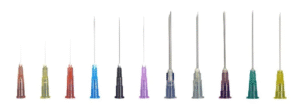
Disposable-Hypodermic-Needles

Key Features:
  • Available in multiple gauges (16G to 30G)
  • Color-coded hubs for easy size identification
  • EO sterilized for maximum hygiene
  • Compatible with Luer Slip and Luer Lock syringes
Common Uses:
  • Intramuscular injections
  • Subcutaneous injections
  • Intravenous injections
  • Blood sample collection

2. Safety Needles

Safety needles are designed with built-in protection mechanisms to reduce the risk of needlestick injuries.
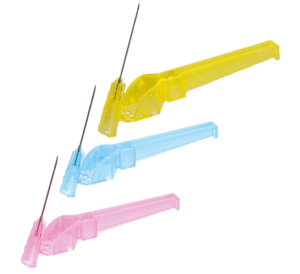
Safety needles are designed with built-in protection mechanisms to reduce the risk of needlestick injuries.

Key Features:
  • Automatic or manual safety shield
  • Reduces exposure after injection
  • Complies with international safety standards
  • Available in multiple gauge sizes
Applications:
  • Hospitals and emergency care units
  • Vaccination programs
  • High-risk clinical environments
  • Healthcare settings prioritizing staff safety

3. Reusable Hypodermic Needles (Veterinary Needles)

Reusable hypodermic needles are precision-engineered for repeated use, mainly in veterinary and laboratory settings.
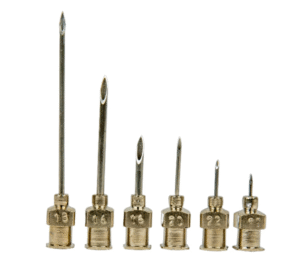
Reusable Hypodermic Needles (Veterinary Needles)

Key Features:
  • Made from high-grade stainless steel
  • Strong needle hub for durability
  • Available in multiple lengths and gauges
  • Designed for repeated sterilization
Applications:
  • Veterinary injections
  • Animal healthcare procedures
  • Laboratory research
  • Repetitive fluid administration

4. Pen Needles

Pen needles are specially designed for use with injection pens, offering comfort and ease of use for self-injection.
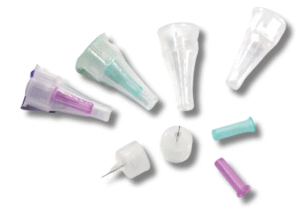
Pen-Needles-

Key Features:
  • Ultra-fine needles for minimal pain
  • Compatible with insulin and hormone pens
  • Short needle length for accurate dosing
  • EO sterilized for home-use safety
Applications:
  • Diabetes management (insulin delivery)
  • Hormone therapy
  • Home healthcare self-injections

5. Blunt Needles

Blunt needles have a rounded, non-sharp tip and are used where piercing the skin is not required.
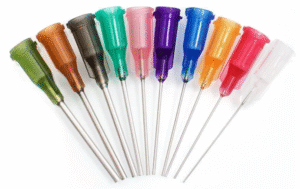
Blunt-Needles

Key Features:
  • Non-coring, blunt tip design
  • Reduces risk of accidental injury
  • Safe handling for healthcare staff
  • Compatible with standard syringes
Applications:
  • Pharmacy compounding
  • Medication preparation
  • Fluid transfer between containers
  • Drawing medication from vials

6. Huber Needles

Huber needles are non-coring needles specifically designed for accessing implanted ports.
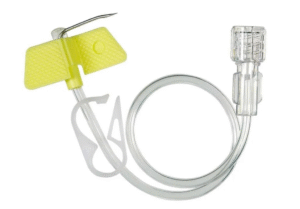
Huber-Needles

Key Features:
  • Non-coring tip to protect port septum
  • Winged design for stability
  • Available with extension tubing
  • EO sterilized and individually packed
Applications:
  • Chemotherapy administration
  • Long-term IV therapy
  • Blood sampling from implanted ports
  • Oncology and chronic care treatments

Choosing the Right Hypodermic Needle

When selecting a hypodermic needle, consider:

  1. Type of injection or procedure
  2. Required needle gauge and length
  3. Patient age and condition
  4. Safety requirements
  5. Compatibility with syringe type
  6. Frequency of use (single-use vs reusable)

Importance of Quality and Compliance

High-quality hypodermic needles should:

  1. Meet ISO and medical device standards
  2. Be EO sterilized
  3. Have sharp, precision-ground tips
  4. Offer consistent flow and minimal pain
  5. Be packaged to maintain sterility

Conclusion: Trusted Needle Solutions from Iscon Surgicals Ltd

Understanding the different types and uses of hypodermic needles helps ensure safe, effective, and accurate medical procedures. From standard hypodermic needles and safety needles to pen needles, blunt needles, and Huber needles, selecting the right needle is essential for both patient care and healthcare worker safety.

Iscon Surgicals Ltd offers a comprehensive range of high-quality hypodermic needles designed to meet diverse clinical, surgical, veterinary, and home healthcare needs. Manufactured under strict quality standards and EO sterilized for safety, Iscon Surgicals Ltd’ needles deliver reliability, precision, and performance you can trust.

Scroll to Top

Send An Enquiry

Call Now Button